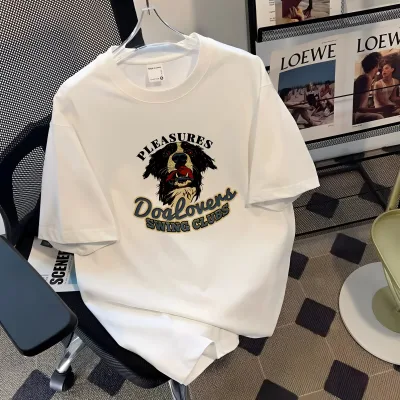
Source Vintage Style Embroidered Cotton T-Shirt for Daily Wear, Streetwear, and Casual Outings
Explore 30 listings for the Vintage Style Embroidered Cotton T-Shirt, featuring options in cotton with knitted or printed techniques. Buyers can compare customization, sizing, and packing details for daily wear, streetwear, and casual outings.
Key considerations
Products List




Comprehensive Sourcing Guide
Vintage Style Embroidered Cotton T-Shirt Sourcing Guide
Sourcing vintage-style embroidered cotton t-shirts requires a precise understanding of how modern manufacturing capabilities align with retro aesthetic demands. The core of this category lies in balancing the tactile authenticity of cotton with the durability of embroidery techniques, ensuring the final garment delivers the desired worn-in look without compromising structural integrity. Buyers must navigate a market where "vintage" often describes a stylistic finish rather than an actual age, necessitating clear communication with suppliers regarding fabric weight, wash treatments, and stitch density to achieve the specific retro silhouette.
Procurement decisions for this item type hinge on verifying that the customization options, such as logo placement and color mixing, do not detract from the intended vintage character. The supply chain for these garments is heavily concentrated in regions like Qingdao, China, where established textile infrastructure supports both standard cotton production and specialized embroidery services. Understanding the specific technical constraints of knitted cotton and the limitations of sleeve styles, such as short sleeves versus sleeveless options, is essential for defining a product that meets both the visual and functional expectations of the target demographic.
Product Scope and Observed Listing Signals
The observed product landscape for vintage-style embroidered cotton t-shirts reveals a diverse range of attributes that buyers must filter to find the correct match. Listings frequently indicate a "Normal" sleeve shape with "Short Sleeve" or "Sleeveless" options, paired with a "Round Neck" or "Crew Neck" design that anchors the vintage aesthetic. The material is consistently identified as cotton, often with a "Moderate" loose fit that mimics the relaxed drape of older garment styles, while the "Printed" or "Embroidered" patterns serve as the primary visual differentiator.
Commercial signals in the market show a wide variance in pricing, with observed ranges spanning from $1.1 to $29.9 USD, reflecting differences in fabric quality, embroidery complexity, and order volume. Minimum Order Quantities (MOQs) are equally flexible, ranging from single units to 2,000 pieces, allowing buyers to test the market with small batches or scale up for promotional campaigns. The "Mixed Color" availability and "Customizable" nature of the logo design and label tags suggest that these products are highly adaptable for streetwear, casual outings, and promotional advertising, provided the buyer can clearly define their specific color and size requirements.
Technical Specifications to Verify
Verifying the technical specifications of the fabric and construction is critical to ensuring the garment meets the vintage aesthetic without sacrificing comfort. Buyers should confirm that the fabric weight aligns with the "230g" standard observed in some listings, as this density often contributes to the structured yet soft hand-feel associated with retro cotton tees. The "Knitted" technics must be paired with a "Normal" thickness to ensure the garment breathes well during summer wear, while the "Machine Wash Cold" care instructions must be strictly adhered to in order to prevent shrinkage or distortion of the embroidered details.
The fit and sizing specifications require careful attention, as the market offers both "Regular Fit" and "Oversized / Loose Fit" options, alongside specific size codes like "L" or "Free Size." Buyers must verify whether the "Buttons" closure or "Open Front" style is applicable to their specific design, as these features significantly alter the garment's silhouette and intended use case. Additionally, the presence of a "Satin" lining or the absence of a hood must be confirmed, as these elements define the layering potential and overall style profile of the final product.
Compliance and Safety Documentation
While specific certification statuses like Oeko-Tex or GOTS are noted in background data, buyers must treat these as verification targets rather than guaranteed attributes of every listing. The primary compliance focus for cotton t-shirts should be on ensuring the fabric and dyes meet the safety standards of the destination market, particularly regarding colorfastness and the absence of harmful substances. Since the products are often intended for "Daily Wear" and "Streetwear," the safety of the materials against skin irritation is paramount, and suppliers should be required to provide test reports that validate the safety of the cotton and the embroidery threads used.
Documentation regarding the "Customization" process, including logo design and label support, must also be scrutinized to ensure that all added elements comply with local labeling laws. Buyers should request evidence that the "Promotional/Advertising" features do not involve non-compliant materials or inks, especially when the product is intended for mass distribution. The "Care" instructions provided by the supplier, such as avoiding sun drying, should be clearly communicated to the end consumer to maintain the product's integrity and prevent premature wear that could lead to quality complaints.
Cost Drivers and Commercial Terms
The cost of vintage-style embroidered cotton t-shirts is driven by several key factors, including the complexity of the embroidery, the weight of the cotton fabric, and the level of customization required. Listings indicate that "Customizable" options for color, logo, and size can significantly impact the final price, with higher MOQs generally yielding better unit costs. The "Bagged" or "Cardboard Box" packing options also influence the total landed cost, as specialized packaging for promotional items often incurs additional fees that must be factored into the budget.
Commercial terms such as lead times and payment structures vary widely, with observed MOQs ranging from 1 to 2,000 pieces, allowing for flexible entry points for different business models. Buyers should negotiate based on the "Customized" standard of the product, ensuring that the agreed-upon price reflects the specific "230g" fabric weight or other material specifications. It is essential to clarify whether the "OEM/ODM" services include design support or if the buyer must provide all artwork, as this distinction can affect both the timeline and the overall cost of the procurement.
Supplier Qualification and Quality Control
Selecting a qualified supplier for this category requires a deep dive into their manufacturing capabilities, particularly their experience with "Knitted" cotton and "Embroidered" detailing. Buyers should verify the supplier's location, with "Qingdao, China" being a prominent hub for this type of textile production, and assess their ability to handle "Customization" requests for logos and labels without compromising the vintage aesthetic. The supplier's track record in producing "Regular Fit" or "Oversized" garments should be reviewed to ensure they can consistently deliver the desired silhouette and fit type.
Quality control protocols must be established to monitor the consistency of the "Mixed Color" options and the durability of the embroidery. Since the product is often marketed for "Promotional/Advertising" purposes, the visual quality of the logo and the alignment of the stitching are critical success factors. Buyers should implement a pre-shipment inspection process that checks for defects in the "Satin" lining, the integrity of the "Buttons," and the overall "Breathable" nature of the fabric to ensure the final product meets the high standards expected of vintage-style apparel.
Long-Term Procurement Checks
Establishing a long-term relationship with a supplier for vintage-style embroidered cotton t-shirts involves regular audits of their production consistency and ability to adapt to changing market trends. Buyers should monitor the supplier's capacity to maintain the "230g" fabric standard and the "Normal" thickness over multiple production runs, as variations in these specifications can alter the garment's feel and appearance. Continuous communication regarding the "Customizable" nature of the product is essential to ensure that the supplier can keep up with evolving design preferences and seasonal demands.
Future procurement strategies should include periodic reviews of the supplier's compliance with safety standards and their ability to provide updated documentation for materials and processes. As the market for "Streetwear" and "Casual Outings" evolves, buyers must ensure that their suppliers can pivot quickly to new styles, such as "Retro / Vintage" variations or different sleeve styles, without disrupting the supply chain. Regular quality checks and feedback loops will help maintain the integrity of the brand and ensure that the "Vintage Style Embroidered Cotton T-Shirt" remains a reliable and profitable product line.
FAQs
What material and style features define this vintage t-shirt?
This vintage style embroidered cotton t-shirt is crafted from breathable cotton fabric with a knitted construction. It features a round neck, short sleeves, and a moderate loose fit. The design includes both printed and embroidered patterns, offering a retro streetwear aesthetic suitable for daily wear and casual outings.
Can I customize the logo and packaging for bulk orders?
Yes, OEM and ODM services are available with fully customizable logo design and label support. Buyers can select from mixed colors or specific shades like gray, blue, and black. Packaging options include bagged or cardboard box formats, allowing for tailored presentation that meets specific branding requirements for promotional or advertising purposes.
What size options and fit types are available for this garment?
Size options range from L to 3XL, with some variations offering one-size-fits-all or free-size configurations. Fit types include regular fit and oversized loose fit styles. The product model codes support various sizing standards, ensuring compatibility with different regional sizing expectations while maintaining the intended retro and streetwear silhouette.
How should I care for the cotton t-shirt to maintain quality?
Care instructions recommend machine washing in cold water with the garment turned inside out. Avoid sun drying to preserve the embroidered details and fabric integrity. The cotton material is durable and breathable, making it suitable for regular use, while proper washing ensures the vintage style and color retention remain intact over time.
Where are these vintage embroidered t-shirts manufactured and shipped from?
These garments are produced in Qingdao, China, leveraging established manufacturing capabilities for cotton apparel. The origin ensures access to reliable supply chains for knitted and embroidered products. Buyers can expect consistent quality standards aligned with the specified 230g weight or customized specifications, supporting both standard and promotional order requirements.